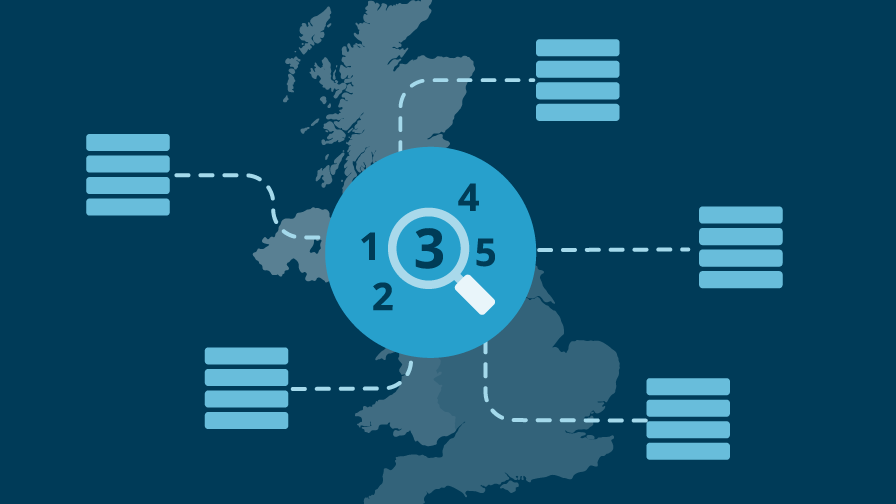
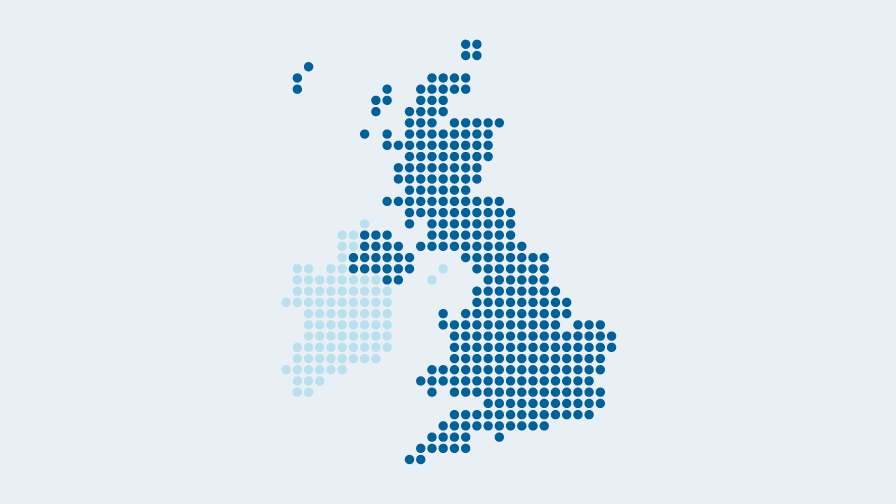
The Labour Force Survey (LFS) is a quarterly sample survey of households living at private addresses in Great Britain. Its purpose is to provide information on the UK labour market that can then be used to develop, manage, evaluate and report on labour market policies. The questionnaire design, sample selection, and interviewing are carried out by the Social and Vital Statistics Division of the Office for National Statistics (ONS) on behalf of the Statistical Outputs Group of the ONS.
ONS publishes full UK LFS results. However, the fieldwork is carried out separately; by ONS for GB, and by the Central Survey Unit of the Department of Finance and Personnel in Northern Ireland on behalf of the Department of Trade and Investment (DETINI).
The survey seeks information on respondents' personal circumstances and their labour market status during a specific reference period, normally a period of one week or four weeks (depending on the topic) immediately prior to the interview.
The LFS is carried out under a European Union Directive and uses internationally agreed concepts and definitions. It is the source of the internationally comparable (International Labour Organisation) measure known as 'ILO unemployment'.
Social and Vital Statistics Division (Office for National Statistics)
Size of data collection:
60,000 Households
Linked surveys/sources:
Labour Force Survey (Northern Ireland)
Method:
Household/Person (Sample) Survey
Status:
Ongoing
Frequency of collection or compilation:
Continuously
Reference period:
Headline results are published 12 times a year for the average of 3 consecutive months; full results released for seasonal quarters i.e. March - May; June - August; Sept - November; December - February
Timeliness:
6 weeks after the end of the period to which they refer.
Year data first available:
1979 (Biennial - but not using ILO definition of unemployment)1984 (annual)1992 (quarterly)
Year of latest available data:
2004
History of data collection / breaks and discontinuities:
There are a number of discontinuities in LFS data caused by changes in the way the Survey has been conducted and changes in the definitions of certain variables. The main breaks occurred in 1984 (when the survey changed from every two years to annual) and 1992 (when the survey became continuous with quarterly publication). Discontinuities are described in the LFS User Guide Volume 1 (1977) ‘Background and Methodology’ - Section 18
Main areas for which data is collected:
National: England Scotland Wales
Extent of geographical coverage:
Sampled: Private households account for 99% of the sample. The list of households is based on the Postcode Address File. ONS estimates this sample to cover 97% of all private households. Because the area north of the Caledonian Canal is sparsely populated a random sample is drawn from the published telephone directory. Two groups are sampled separately: Information on students living in halls of residence is collected via their parents household and people living in NHS accommodation are sampled using a separate list of such accommodation.
Spatial units of data collection:
Postal Address
Smallest spatial unit for which data are made available:
Local Authority Districts
Commonly available units for which aggregate data are made available:
GOR, SSR, county, local authority district, unitary authority; Local Authority District (LAD)/Unitary Authority(Eng); Training and Enterprise Council (TEC) Area (E&W); Local Enterprise Company (LEC) Area (Scotland); County (E&W)/Unitary Authority (Eng)
Standard geographical classification or coding systems used:
ONS Central Postcode Directory; ONS Standard Geographic Names and Codes (OGSS)
Descriptive summary of geographical coverage and geographic referencing system:
GB survey of private households. Results are available at regional (GOR and SSR) level. Seasonally adjusted data are only available at the national level. Limited results down to local authority district level.
Legislative status:
Carried out under a European Union Directive
Deposited with data archive?
Yes
Bibliographic material:
How Exactly is Employment Measured?; Office for National Statistics; October 2001. Available from the Labour Market Helpline: 01633 456901 Guide to Labour Market Statistics Releases; Office for National Statistics; October 2001. Available from the Labour Market Helpline: 01633 456901 The new presentation of labour market statistics: guidance for users about sources. by Richard Laux, Office for National Statistics. published in Labour Market Trends May 1998. Improved ONS labour market statistics by Labour Market Division,ONS; published in Labour Market Trends, February 1998. How exactly is Unemployment Measured?; Office for National Statistics; October 2001. Available from the Labour Market Helpline: 01633 456901
Age/Date of Birth Ethnic Group Nationality/Country of Birth Marital status Sex Socio-Economic Group
Harmonised questions used:
Household composition: gender; age last birthday; date of birth; marital status; living arrangements; household reference person; ethnic origin, national identity. Industry, occupation, socio-economic classification. Period of residence at current address. Housing tenure. Household response unit.
Details of last job Duration of current job Duration of unemployment Method of obtaining job Method of seeking work Method of travel to work Part-time/full-time employment Permanent/Temporary employment Public/Private sector employment Reason for leaving last job Reason for not seeking work basic economic activity (ILO definition) type of family unit whether looked for work in last four weeks industry in main job occupation in main job whether working in public or private sector whether did paid work in reference week employment status in main job total usual hours worked whether had second job in reference week industry in second job occupation in second job type of employment sought Whether works paid/unpaid overtime Current education received Whether working full or part time Whether would like full or part time work Whether has health problems which limit the work able to do Occupation in last job Industry in last job Reason job is temporary
The LFS is based on a systematic random sample design which makes it representative of the whole of Great Britain. Each quarter’s LFS sample of 60,000 private households is made up of 5 ‘waves’, each of approximately 12,000 households. Each wave is interviewed in 5 successive quarters, such that in any one quarter, one wave will be receiving their first interview, one wave their second, and so on, with one wave receiving their fifth and final interview. As a result, there is an 80% overlap in the samples for successive quarters. Households are interviewed face-to-face when first included in the survey, and by telephone thereafter. Further details of the quarterly LFS sample design, methodology, and sampling variability are given in the technical note of the LFS Quarterly Supplement and in the article ‘The quarterly LFS - a new dimension in labour market statistics’, Employment Gazette, October 1992, pp483-488.
Main historical changes in methodolgy and other breaks/discontinuities:
From 1979 to 1983 the LFS was carried out every two years. Following a change in the requirements of the EC Regulation, from 1984 to 1991 it was an annual survey. In 1984, the ILO definition of unemployment (See Glossary) was adopted in the UK Labour Force Survey. Prior to that the ‘LF’ definition of unemployment was used. Key differences in design, method, sampling frame and definitions were introduced when the LFS became a continuous survey in Spring 1992. Results were published quarterly from 1992 until April 1998, when monthly publication of headline estimates for 3-month periods was introduced. Particular variables have also been affected by changes in definition over time. See LFS Historical Supplement 1996 for further details.
Statistical procedures applied to data:
Details of validation and editing:
Imputation process:
Outlier detection and treatment:
Estimation method:
Seasonal adjustment or trend estimation technique:
Since March 1997, seasonal adjustment of LFS estimates have been carried out wholly within a statistical software package called X-11 ARIMA (the standard seasonal adjustment package of the ONS). More detail of the seasonal adjustment of LFS data can be found in Volume 1 of the LFS User Guide.
Status of data:
Developments in the pipeline:
Current year:
ONS are currently in the process of reweighting all LFS datasets for all the quarterly periods from 1992 onwards and the annuals for 1984 -1991. This means that the data will be adjusted to include the results of the 2001 Census and the latest population estimates. These regrossed datasets will be available from March 2004
All persons aged 16 and over resident in Great Britain
Study population:
Survey achieves only partial coverage of: the population north of the Caledonian Canal, which accounts for about 5% of the total population of Scotland, and; persons living in NHS accommodation
Sampling unit:
Persons aged 16 and over resident in private households and NHS accommodation, and young people living away from the parental home during term time in a student hall of residence, or similar institution. Proxy replies are accepted from related adults.
Sampling frame:
Most of the GB sample (99%) is taken from the ‘small users’ sub-file of the Postcode Address File (PAF) which is a computer list , prepared by the Post Office, of all the addresses (delivery points) which receive fewer than 25 articles of mail a day. The sampling frame for persons living in NHS accommodation is supplied by the NHS. Persons living north of the Caledonian Canal were sampled from the published Telephone Directory.
Design/selection of sample:
A single stage sample of addresses with a random start and constant interval is drawn from the Postcode Address File (PAF) for Great Britain south of the Scottish Caledonian Canal. The PAF is sorted by postcode so the sample is effectively stratified geographically.
Quality Measurement:
Sampling error:
In order to indicate the degree of precision of LFS estimates, standard errors, relative standard errors (i.e. the standard error as a percentage of the estimate) and 95% confidence intervals (i.e. estimate + or - 1.96 standard error) for the estimates are calculated. The 95% confidence intervals indicate the ranges either side of the LFS estimates and estimated changes which are 95% certain to include the true values of the quantities estimated. A table showing these values is published in the LFS Quarterly Bulletin.
Non-sampling error:
Restrictions on access/usage:
Because of sampling variability, estimates of 10,000 are the smallest released